
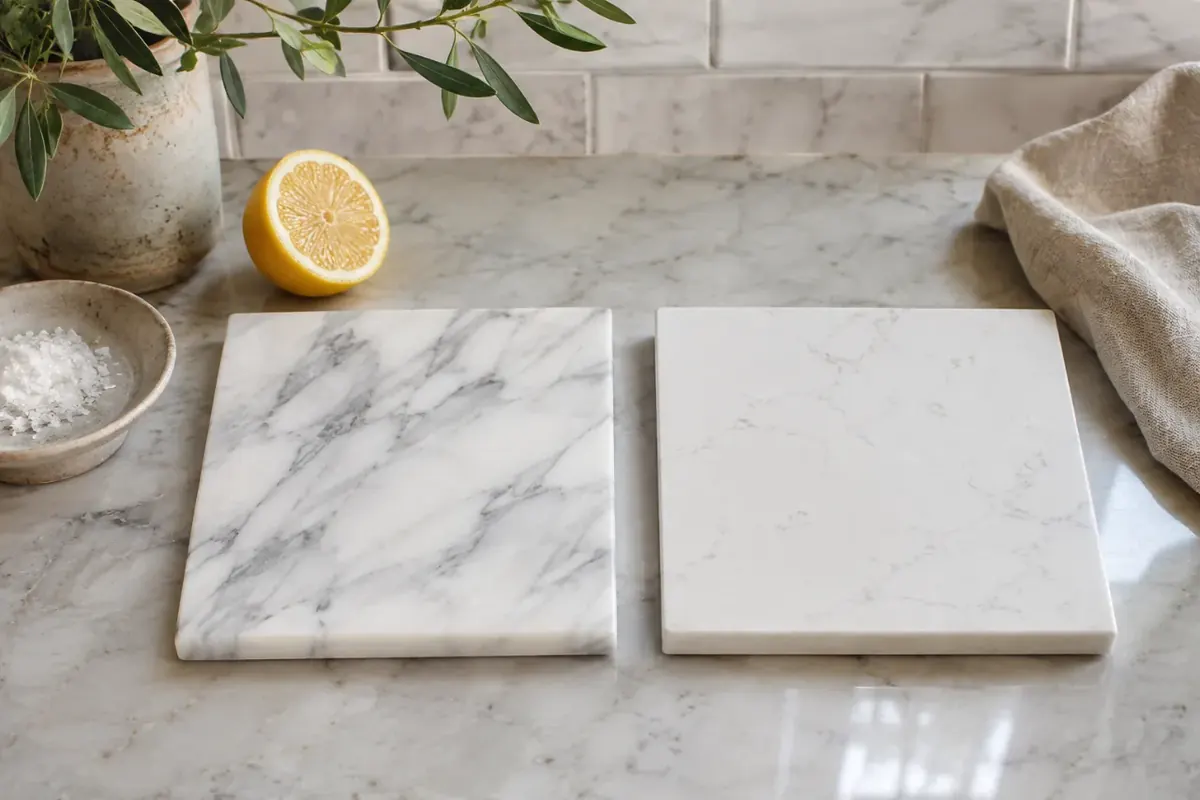
What Is the Difference Between Quartz and Marble?
Quartz countertops are engineered from ground quartz bound with resin, while marble is a natural calcium-based stone cut from a quarry. That difference explains nearly everything about how each one behaves in a kitchen.
| Factor | Quartz | Marble |
|---|---|---|
| Stains | Non-porous, resists most stains | Porous, needs periodic sealing |
| Acids | Not affected by lemon or wine in normal use | Etches on contact with acids |
| Heat | Resin can discolor or crack, so use trivets | Handles warmth, though trivets are still advised |
| Scratches | Hard surface, resists scratching | Softer, can scratch with use |
| Look | Consistent color and pattern | Unique veining in every slab |
| Upkeep | Wipe clean with mild soap | Seal as directed and wipe spills quickly |
Stains
- Quartz
- Non-porous, resists most stains
- Marble
- Porous, needs periodic sealing
Acids
- Quartz
- Not affected by lemon or wine in normal use
- Marble
- Etches on contact with acids
Heat
- Quartz
- Resin can discolor or crack, so use trivets
- Marble
- Handles warmth, though trivets are still advised
Scratches
- Quartz
- Hard surface, resists scratching
- Marble
- Softer, can scratch with use
Look
- Quartz
- Consistent color and pattern
- Marble
- Unique veining in every slab
Upkeep
- Quartz
- Wipe clean with mild soap
- Marble
- Seal as directed and wipe spills quickly
Which Countertop Should You Pick for Your Situation?
Match the material to how the kitchen will be used. If your case is on the left, the pick on the right is usually the better fit.
| If your case is | Pick |
|---|---|
| Busy family kitchen with daily cooking | Quartz |
| Rental or investment condo | Quartz |
| Historic rowhouse where patina suits the home | Marble |
| You bake often and want a cool work surface | Marble |
| You want the marble look without the upkeep | Marble-look quartz |
Busy family kitchen with daily cooking
- Pick
- Quartz
Rental or investment condo
- Pick
- Quartz
Historic rowhouse where patina suits the home
- Pick
- Marble
You bake often and want a cool work surface
- Pick
- Marble
You want the marble look without the upkeep
- Pick
- Marble-look quartz
How Do Quartz and Marble Fit Boston Homes?
In Boston, the building can matter as much as the material. Natural marble often feels right in a Beacon Hill or South End rowhouse, while quartz's clean, even look suits a Seaport tower.
Access affects both. Large slabs may not fit a narrow stairwell or small elevator, so seams need planning either way. Read more about kitchen countertop installation in downtown buildings.
What Maintenance Does Each One Need?
- Quartz: Clean with mild soap and water, and keep hot pans on trivets.
- Marble: Wipe up acids quickly, use cutting boards and seal as your fabricator recommends.
- Both: Avoid harsh or abrasive cleaners that can dull the surface.
Asked often
Quartz and Marble Questions
Is quartz better than marble for a kitchen?
Quartz is easier to maintain, so it's the better choice for most busy kitchens. Marble is the better choice if you value natural veining and accept patina.
Does marble stain easily?
Marble is porous and can stain if spills sit on it. Sealing helps with staining, but it doesn't prevent etching from acids.
Can you put a hot pan on quartz?
It's best not to. The resin in quartz can discolor or crack under high heat, so use a trivet.
Does marble suit older Boston homes?
Often, yes. Its natural aging can look right at home in Boston's historic rowhouses, where worn materials add character.
Can quartz look like marble?
Yes. Many quartz products imitate marble veining, though the pattern is more uniform than natural stone.
Sources
- Natural Stone Institute guidance on caring for marble and natural stone
- Published care guidance from engineered quartz manufacturers